.png)
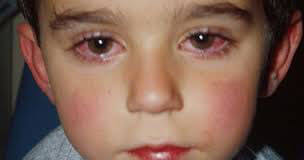
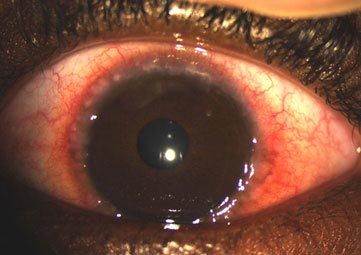
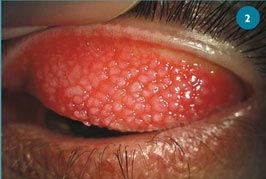
Allergic conjunctivitis (Vernal Catarrh, Spring Catarrh) is caused by airborne allergens (e.g., pollen, dust) contacting the eye. It typically presents as bilateral ocular pruritus (itching), redness, and watery discharge. It may be perennial (all year round) or seasonal (SAC) in spring or pollen season.
Several general measures are helpful to most patients with allergic conjunctivitis:
Antihistamine/vasoconstrictor combination products (nephazoline and phenaramine), antihistamines with mast cell stabilizing properties (olopatadine), mast cell stabilizers (cromolyn sodium), and for refractory symptoms, topical glucocorticoids.
Mast cell stabilizing agents include cromolyn sodium. Full efficacy is reached 5–14 days after therapy, so they are not useful for acute symptoms.
Topical glucocorticoids (steroid eye drops) may be considered for patients with refractory symptoms. Use only for short "pulse therapy" of up to 2 weeks. Side effects include cataract formation, elevated intraocular pressure (IOP), glaucoma, and secondary infections.
Dry eye can coexist with allergic conjunctivitis and worsen it:
Signs include discharge, redness, watering, foreign body sensation, grittiness, and matting of eyelashes.
Discharge is more purulent in bacterial conjunctivitis than in viral conjunctivitis (clear watery).